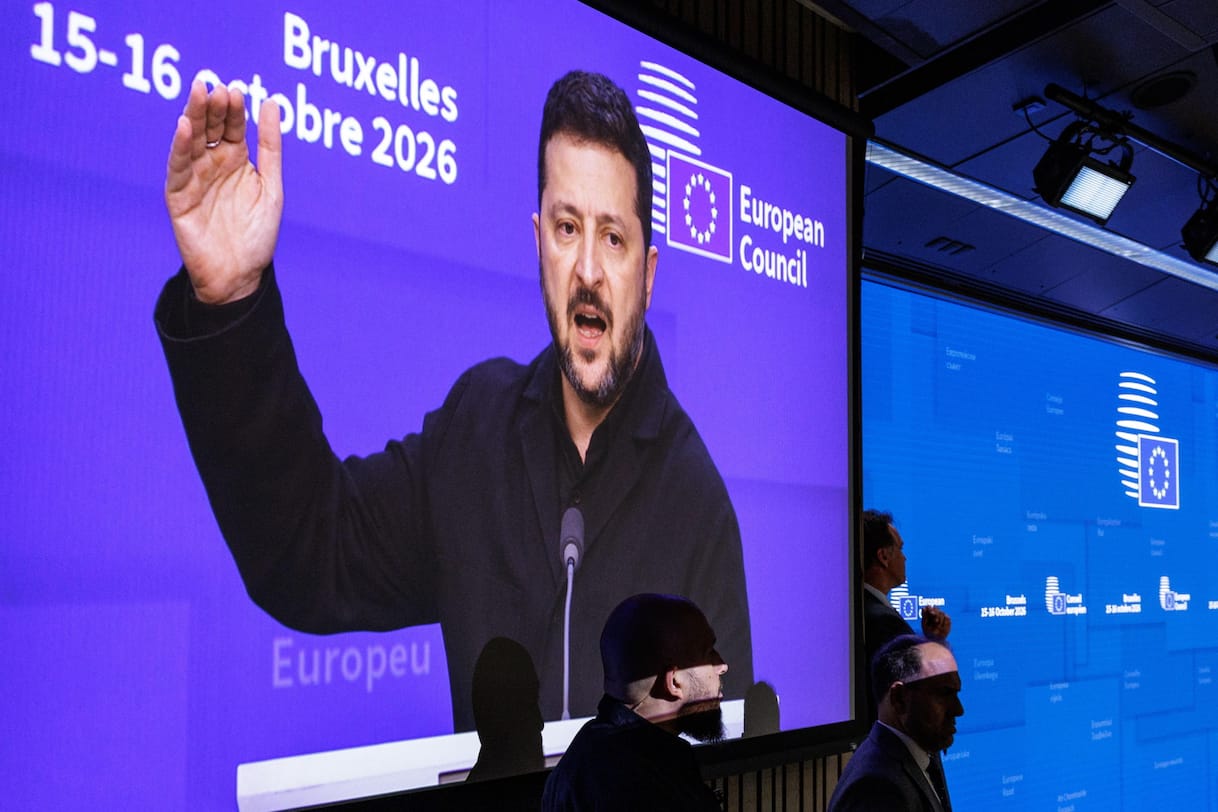
Ukrainian President Volodymyr Zelensky told European leaders gathered in Brussels on Friday that his country will need at least €70 billion in additional support from them in 2027, according to Sky TG24. He put the total cost of the war next year at €155 billion.
Addressing the European Council, Zelensky said the extra money would go toward defense, weapons and what he described as Ukraine's resilience. He called the figure realistic and asked the leaders to secure the support, saying it would help contain Russia.
Speaking as he arrived at the summit, Zelensky thanked the European Council, the European Commission and European leaders for what he called enormous backing since the war began, Sky TG24 reported. He said Ukraine wants to end the war as quickly as possible but currently sees no signals from Russia that it is ready to do so.
Why it matters
The request lands at a moment when the diplomatic ground around Ukraine appears to be shifting. According to ANSA, the summit was framed by a rupture between Washington and Kyiv, and by European concerns about a possible reversal in US policy under President Donald Trump. ANSA reported that Trump said he is not a fan of Zelensky.
European leaders used the meeting to restate their alignment with Ukraine, Avvenire reported, describing a position of no vetoes and yes to new aid. Borsa Italiana reported that the EU reaffirmed its axis with Zelensky while worrying about a change of course from Trump.
The funding question is not only about arms. It also tests whether Europe is prepared to carry a larger share of the burden if US support becomes less predictable.
Drones, refineries and a stalled energy truce
Zelensky devoted part of his remarks to drones, which he said allow Ukrainian forces to stop most Russian attacks along the front line, disrupt Russian supply routes and weaken Moscow's economy. He said Ukraine could produce two to three times more drones of various types than it does now, but lacks the money. He asked the leaders to imagine the added pressure on Russia if that production were possible.
In parallel, Kyiv has resumed strikes on Russian oil refineries after the collapse of an energy truce and a diesel agreement between Washington and Moscow, according to ANSA. The Ryazan facility has already been hit, ANSA reported.
In an interview with the Financial Times, Zelensky criticized what he called a dangerous interruption of US intelligence sharing and a weakening of the Starlink service, which ANSA reported appeared to be working again on Friday. Trump responded by saying that Zelensky's refinery attacks push up energy prices, calling the situation a scandal and saying the Ukrainian leader is harder to deal with than Vladimir Putin, according to ANSA.
The Kremlin's envoy, Kirill Dmitriev, said Russia and the United States will announce further significant initiatives beyond the diesel arrangement. Speaking at a plenary session of Russian Energy Week, he said the ice has finally started to melt, and argued that awareness is growing in the US that structured economic cooperation with Russia benefits markets, especially volatile ones, and that sanctions ultimately hurt the United States itself.
Attacks in the west and a new face in Budapest
Ukraine's Volyn region, in the far west near the Polish border, came under a new drone attack on Friday involving Shahed-type weapons, including jet-powered models, local authorities told RBC. Roman Romanyuk, head of the regional police department, said another company with foreign investment was struck in Lutsk. In Kovel, an attack set roughly ten trucks and semi-trailers on fire and injured one person.
Zelensky also met Hungary's new prime minister, Peter Magyar, the successor to Viktor Orban, in what he called an excellent first official meeting since the pro-European leader took office in Budapest. Zelensky said they discussed bilateral relations, the economy and logistics, and that they agreed on X to resume joint work at various levels along with reciprocal visits. He said they talked about efforts to end the war Russia launched, and he thanked Magyar for solidarity with Ukraine and willingness to cooperate.
The meeting followed Zelensky's signing on Monday of a law strengthening minority rights in Ukrainian education. The issue matters because western Ukraine is home to a Hungarian-speaking population. Kyiv made Ukrainian the main language of secondary education in 2017, and Hungary had made minority language rights a precondition for progress in Ukraine's EU accession talks.
Frozen assets remain frozen
On using immobilized Russian assets held in the EU to support Ukraine, Swedish Prime Minister Ulf Kristersson said the matter was discussed in depth only a few months ago, when it became clear there was at least for now no possibility of carrying it out. He said the question came up again on Friday and nothing had changed.
That leaves the €70 billion request resting on fresh commitments from European capitals rather than on Russian money already sitting in EU accounts.
What to watch next: whether EU leaders convert Zelensky's request into concrete pledges, and whether the signals from Washington shift further as Russia and the US prepare the initiatives Dmitriev teased.